
It’s no secret that temperatures here in Arizona can get pretty extreme especially in the summer, but that doesn’t hold back homeowners who look to their backyard as a space for entertaining and expanded outdoor living. Designing a backyard to be enjoyable despite the extreme heat, takes experience and a careful eye. We’ll share a few of our favorite tricks here, so that you can sweat less and relax more.
Start with orientation in relationship to the sun
In Phoenix and the surrounding area, a west-facing patio is unusable from 3 to 8pm from May through September, no matter what you put on it. That late afternoon sun can be brutal. Be sure to pick a site that is on the north or east side of the home, or in the shadow the house itself casts, during that late afternoon window. It’s important to work with, not against, what the house gives you.
For shade structures, choose function over decor
Pergolas are great, but you know what’s better? Automated or remote-controlled louvered pergolas that close against the sun but open up for the night sky. Fabric shades should be avoided - they do let radiant heat through and degrade quickly in the sun’s rays.
…But we do love trees that provide shade
Native and desert-adapted canopy trees (mesquite, palo verde, ironwood, Chinese pistache) placed on the west and south sides drop ambient temperatures and cut cooling loads on the house itself. Desert plantings also survive HOA and water-use rules that lush landscaping increasingly won't.
Avoid materials that absorb heat
Dark concrete or flagstone stays 20–30°F hotter underfoot than lighter-colored travertine, limestone, or pavers with reflective aggregate. The key is this: materials that reflect, not absorb heat. Turf and dark stone can exceed 150°F on a July afternoon - and we don’t want to think about how pets with bare feet feel about that!
Water doesn’t just cool - it comforts
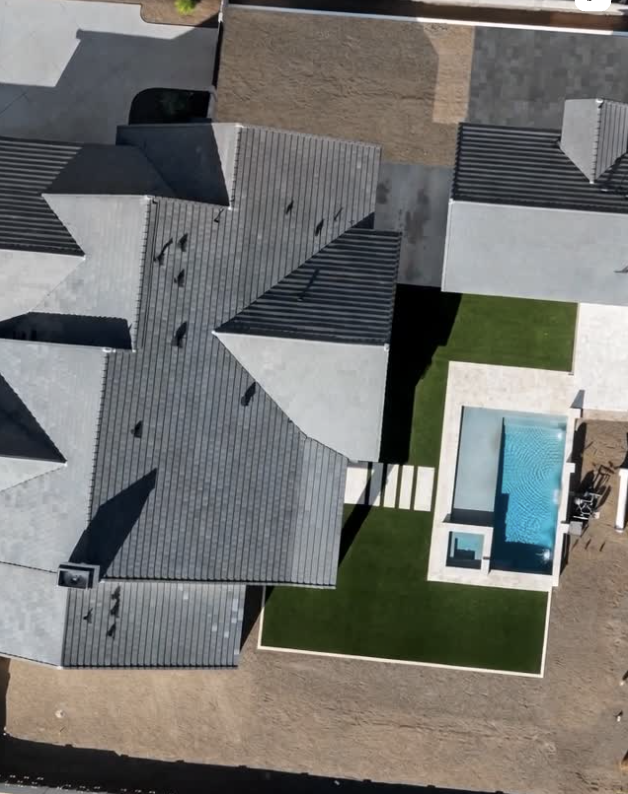
Pools, spas, waterfalls, and misting systems don’t just create evaporative cooling, but they also evoke a psychological cue that the space is comfortable (putting aside the heat for a moment, we love the soothing sound of a trickling water feature in the background). Pro tip: position water features upwind of seating areas so that breezes carry the cooled air toward people.
We’re obviously a fan
Don’t forget ceiling fans in every covered zone, and consider high-velocity fans in outdoor kitchen areas. One common mistake we see is bolting a misting line on afterward rather than integrating these subtly into the structure of the exterior.
Design for the evening, not the afternoon.
Most Arizona backyard use happens after 6 p.m. and in the milder seasons. Layered lighting, fire features for October through March, and heaters under the patio make the yard a year-round space rather than a six-month one.